Welcome Message!

Hello students! Have fun studying English. I'm always here to help you improve your English skills. I'm your teacher and your friend. Let's have fun and continue our path to fluency. :)
Showing posts with label Level4-Chapter1. Show all posts

Wednesday

Level 4 Chapter 1: Relationships - Lesson 10: Review


  • LEVEL 4
  •  

  • Chapter 1: Relationships
  •  

  • Lesson 6 - 9 Review
    •  
    • Chapter 1: Relationships
    •  
    • Lesson 6 - 9 Review
    Situation: Your foreign friend’s partner, Yu, is Korean. Your friend is nervous because he/she is going to have lunch with Yu’s parents.

    Mission: Help your friend prepare for the lunch.

    IN THIS LESSON, YOU WILL

    1. Read your friend’s text message.
    2. Give your friend advice on what to do during lunch.
    3. Give your friend some gift ideas.

    PRACTICE

    STEP A EXERCISE

    Choose the correct words in the parentheses.

    1. I ordered six (bags / bottles / boxes) of pizza.
    2. Janet (got / has) to take her friend to the airport.
    3. Let’s buy ten (bags / bottles / boxes) of soda.
    4. (You’ve got to / You’d got to) give her a gift for your anniversary.

    STEP B EXERCISE

    Unscramble the words in parentheses to complete the sentences.

    1. I usually (give / jewelry / her) for her birthday.
    2. Barry said (sweetly / very / “I love you”).
    3. Joey sent (to / his girlfriend / a bouquet of flowers).
    4. My mom (me / a bag / bought) in Singapore.

    MISSION

    Challenge 1

    Your foreign friend sent you a text message.


    Read his/her message.

    Remember?

    • have to/have got to
    • adverbs
    • (verb) + (direct object) + to + (indirect object)

    Hey! Big news: Yu’s parents are coming to the city this week. Yu wants us all to meet for lunch this Saturday. Yikes! What should I do? Meeting the parents is really important in Korea, right?


    I heard that you should give a gift to your boyfriend’s or girlfriend’s parents when you meet them. I have to choose a gift really carefully, but honestly, I have no idea! I guess I have to go shopping later this week.


    Please call me when you read this. I have some questions for you. Thanks!

    COMPREHENSION QUESTIONS

    1. What is your friend going to do this Saturday?
      • have lunch with Yu’s parents
      • take a trip with Yu
    2. What did your friend say about meeting the parents in Korea?
      • It’s really stressful.
      • It’s really important.
    3. What does your friend have to choose really carefully?
      • a good restaurant
      • a gift

    Challenge 2

    You called your friend after reading his/her message.


    Tell your friend what to do when he/she meets Yu’s parents.

    Remember?

    • have to/have got to
    • adverbs

    Challenge 3

    You and your friend are shopping for a gift for Yu’s parents.
    Give him/her some ideas.

    Remember?

    • have to/have got to
    • bag/box/bottle of
    • (verb) + (indirect object) + (direct object)
    • (verb) + (direct object) + to + (indirect object)

    FEEDBACK

    NEXT LESSON

    Chapter 2 Lesson 1 (Listening) - I go to design school after work.

    Level 4 Chapter 1: Relationships - Speaking - Lesson 9: Showing You Care

     Lesson 9: Showing You Care

    Lesson 9: Showing You Care
    She made my lunch box carefully.

    I can explain how people show they care.

    INTRODUCE

    There are many ways people can show they care. Different cultures show they care in different ways.

    PRESENT

    STEP A VOCABULARY

    I. Listen and repeat.

    carefully

    quickly

    slowly

    nicely

    loudly

    quietly

    II. Which of the adverbs above describe how you eat, speak, and write? Choose one adverb for each action.

    • eat

    • speak

    • write

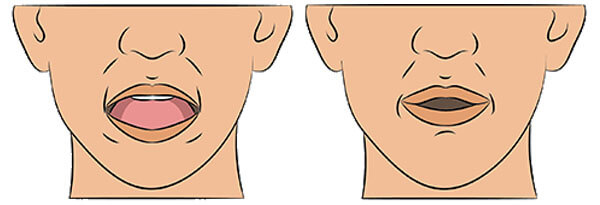
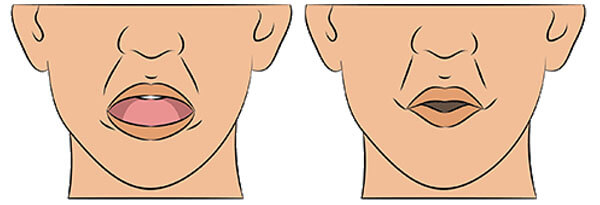
    III. Practice reading the words.

    /aʊ/

    /oʊ/

    loudly

    lowly

    gown

    grown

    bout

    boat

    STEP B GRAMMAR TIP

    Use adverbs to talk about how someone does something.

    Put adverbs after the object of the sentence.

    • He painted the fence carefully.
    • She plays the guitar beautifully.

    If the sentence has no object, put adverbs after the verb.

    • My sister talks loudly.
    • Harold types quickly.

    Put adverbs after really or very.

    • She played tennis really badly.
    • The children played very quietly.

    UNDERSTAND

    SPEAKING

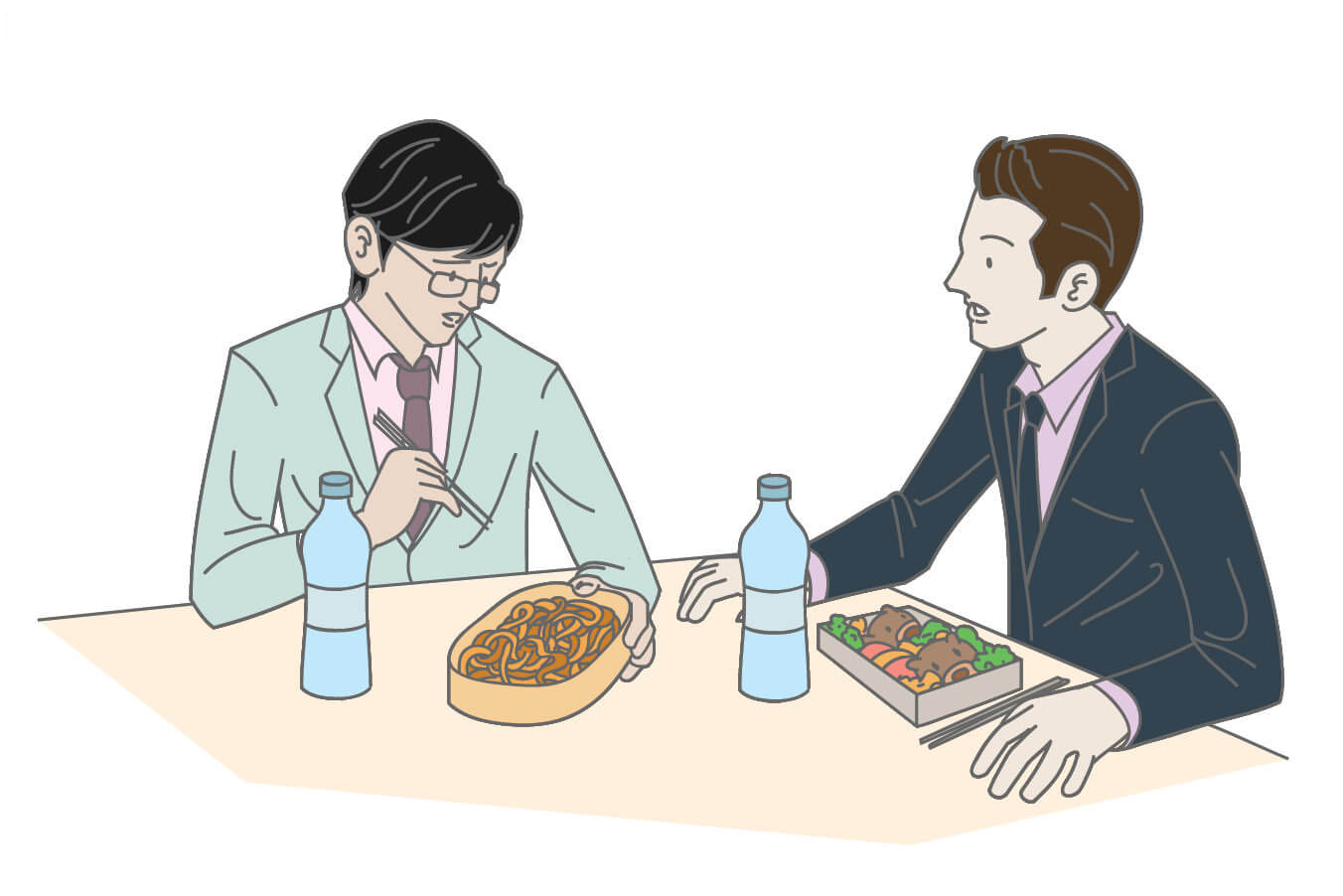
    Dan and Eric are talking in the breakroom at work.

    Dan:

    So how are you and Mina doing? Is she still mad?

    Eric:

    No, we’re okay now. Look, she even made me a lunch box today!

    Dan:

    Wow, that looks good! She arranged it really nicely. She must care about you a lot. When Yuri and I were first married, she made my lunch box carefully. Every day had a different theme, and it looked really nice. But now, she makes my lunch quickly because she’s so busy with that fan club. Look at it. It doesn’t look good at all!

    Eric:

    (laughs) Well, I’m sure it still tastes good. And you’re lucky that she makes your lunch!

    TRIVIA

    Lunch boxes are slowly gaining popularity in the United States, but many people still prefer the classic American brown paper bag for packed lunches. You can see them in schools and offices across the country.


    PRACTICE

    STEP A EXERCISE

    Are the underlined parts grammatically correct? If not, correct them.

    1. My wife always says “I love you” really loudly.
    2. The children’s mother hugged quickly them.
    3. My girlfriend sang the song sweetly very.
    4. The couple said goodbye really quietly.

    STEP B EXERCISE

    Add the adverbs in parentheses to the sentences. Be sure to put them in the correct place.

    1. She kisses him every morning when he goes to work. (quickly)
    2. The young couple were holding hands. (happily)
    3. Kenta can speak English. (perfectly)
    4. I got dressed really. (slowly)

    CHALLENGE

    Challenge 1

    You and your foreign friend are at a cafe. She is complaining about her boyfriend because she thinks he doesn’t care for her.


    Explain to your friend the different ways people show they care in your country.

     Today's grammar tip

    • adverbs

    Challenge 2

    Discuss your ideas.

    If Time
    Allows
    1

    SHOWING YOU CARE

    2

    HOW YOU DO THINGS

    3

    LUNCH

    1. Who do you care about the most?
    2. How do you show someone that you care about them?
    3. In what countries is it common to hug people and say "I love you" loudly?
    4. In what countries is it not very common to hug people and say "I love you" loudly?
    1. How do you get ready in the morning?
    2. How do you find new friends?
    3. How do you spend your weekend?
    4. How do you have fun?
    1. Which do you prefer, you making lunch for someone or someone making lunch for you?
    2. Imagine you are going to make lunch for someone. What will you make?
    3. Imagine someone made lunch for you, but it doesn’t taste good. Will you still eat it?
    4. Do you prefer to make your own lunch or eat at a restaurant?

    FEEDBACK

    NEXT LESSON