Welcome Message!

Hello students! Have fun studying English. I'm always here to help you improve your English skills. I'm your teacher and your friend. Let's have fun and continue our path to fluency. :)
Showing posts with label Level5-Chapter1. Show all posts

Thursday

Level 5 Chapter 1: Food - Lesson 10: Lesson 6-9 Review


Situation: Your friend invited you and some foreign friends to a potluck party.

Mission: Prepare a dish for the party and share information about Korean manners and eating habits with other guests.

IN THIS LESSON, YOU WILL

1. Read a recipe.
2. Talk with a foreign guest about Korean eating habits.
3. Discuss good and bad table manners with a foreign guest.

PRACTICE

STEP A EXERCISE

Change the verbs in the parentheses into the correct forms. More than one answer may be possible.

  1. I dislike (eat) junk food.
  2. She loves (drink) coffee every afternoon.
  3. Sprinkle salt and pepper after (add) the vegetables.
  4. I need (go) on a diet.

STEP B EXERCISE

Are the underlined words used correctly? If not, correct them.

  1. I couldn’t sleep, so I stopped drinking coffee.
  2. Isn’t you tired of eating the same food every day?
  3. While boil the noodles, grill the shrimp.
  4. Didn’t you eat a corndog yesterday too?

MISSION

Challenge 1

Your friend invited you to a potluck party. He/She asked you to make a Japanese dish for the party, so you are checking out a cooking website.


Read the recipe.

Remember?

  • before + (gerund)
  • after + (gerund)
  • (verb) + (infinitive)

Salad Udon

Here’s an easy Japanese recipe for people who are on a diet but still want to eat something delicious!


What you need:

udon noodles

tomato

cucumber

lettuce

ponzu

mirin

sesame oil

water


The steps:

1. Prepare the udon noodles and sauce.
Boil the udon noodles for 2-3 minutes and then rinse them in cold water. While boiling the udon noodles, prepare the sauce. Mix the ponzu, mirin, sesame oil, and water.


2. Assemble the ingredients.
Put the udon noodles in a bowl. After cutting the tomato, cucumber, and lettuce into bite-size pieces, put them on top of the udon noodles.


3. Serve.
Pour the sauce on top right before serving. Enjoy!

COMPREHENSION QUESTIONS

  1. What kind of people is this dish for?
    • people who exercise a lot and need lots of calories
    • people who are on a diet but want to eat good food
  2. When should you make the sauce?
    • while boiling the udon noodles
    • after boiling the udon noodles
  3. When should you pour the sauce on top?
    • before serving
    • before cutting the tomato, cucumber, and lettuce

Challenge 2

Now you’re at your friend’s potluck party. You’re sitting next to your friend’s cousin from the Philippines. It’s his/her first time visiting Korea.


Talk to him/her about Korean eating habits.

Remember?

  • before + gerund
  • after + gerund
  • (verb) + (infinitive)

Challenge 3

Now you are chatting with another guest at your friend’s potluck. He/She is American and just moved to Japan a few weeks ago.
Talk about good and bad table manners.

Remember?

  • (verb) + (gerund)
  • (verb) + (to-infinitive)

FEEDBACK

NEXT LESSON

Chapter 2 Lesson 1 (Listening) - If you have a headache, sit down and have a cold drink. 

Tuesday

Level 5: Chapter 1 - Speaking - Food - Lesson 9: Table manners

 Lesson 9: Table Manners

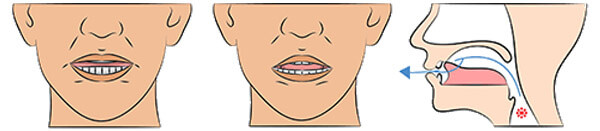
Could you please stop slurping your noodles?

Goal: I can discuss good and bad table manners.

INTRODUCE

Table manners are different in every culture. It’s helpful to explain Korean table manners to your foreign friends who visit Korea.

PRESENT

STEP A VOCABULARY

I. Listen and repeat.

slurp

burp

talk with your mouth full

cross your chopsticks

put your elbows on the table

pick up your bowl

찻잔을 들어 올리다

II. Which of the things above do you think are good manners? Which ones are bad manners?

  • good manners

  • bad manners

III. Practice reading the words.

/cr/

/cl/

cross

close

crab

club

crop

clop

STEP B GRAMMAR TIP

When two verbs are next to each other in a sentence, they usually follow one of two patterns:

  1. (verb) + (gerund)
  2. (verb) + (to-infinitive)

However, some verbs can use both patterns.

You can use both pattern 1 and pattern 2 with the following verbs. The meaning is more or less the same.

start

continue

prefer

hate

like

love

  • love slurping ramen.
  • love to slurp ramen.

You can use pattern 1 or 2 with the following verbs, but be careful: The meaning changes.

remember

forget

stop

Use pattern 1, (verb) + (gerund), to show that the second verb happened before the subject stops, remembers, or forgets.

  • She visited this bakery twenty-five years ago and still remembers ordering their chocolate cake.
  • The boy’s mom yelled at him, so he stopped talking with food in his mouth.

Use pattern 2, (verb) + (to-infinitive), to show that the second verb happens after the subject stops, remembers, or forgets.

  • She remembered to order a chocolate cake for the party.
  • The jogger’s friend waved at him, so he stopped to talk.

UNDERSTAND

SPEAKING

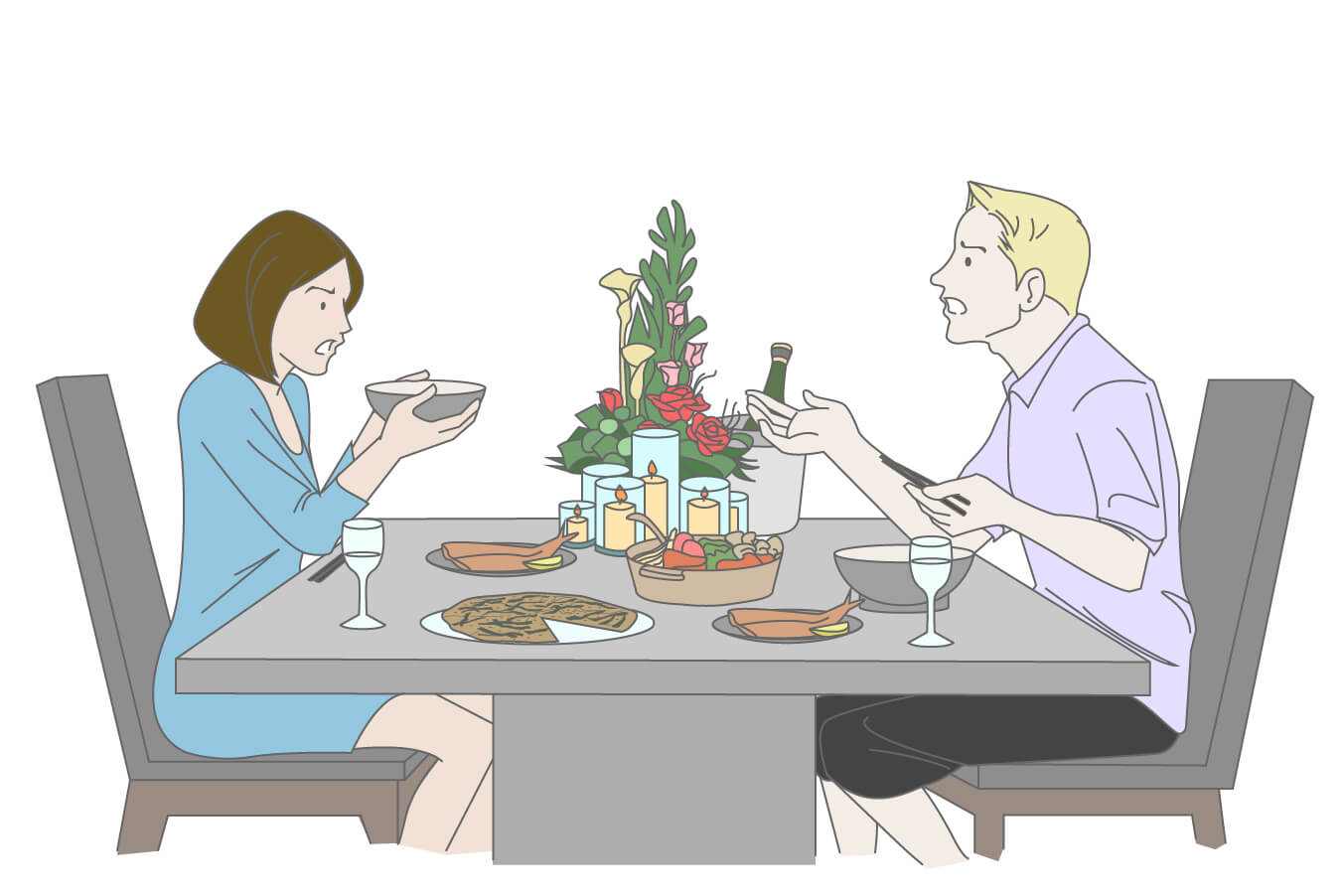
Ai and Jake are having their anniversary dinner. Ai prepared a very special meal.

Jake:

Ai…

Ai:

Yes, honey?

Jake:

Could you please stop slurping your noodles? It’s so rude.

Ai:

Slurping your noodles is rude in Canada, Jake. We are in Japan, it's okay to slurp noodles here you know.

Jake:

Yes, but I’m Canadian.

Ai:

Well, you love talking with your mouth full, but that’s rude in Canada too. You also like to put your elbows on the table. And do you remember burping during lunch yesterday? That was–

Jake:

Okay, okay, I’m sorry! Let’s just enjoy the nice dinner that you made. I may not like watching you eat, but I love eating your cooking.

TRIVIA

Although it is considered bad manners in most countries, burping is actually polite in some countries like Bahrain and China. It shows that you enjoyed your meal and are full.


PRACTICE

STEP A EXERCISE

Complete the sentences using the pictures and words in the parentheses. More than one answer may be possible.

(stop / put my elbows on the table)

1. I _____ years ago.

(hate / leave food)

2. I _____ on my plate.

(love / eat pizza)

3. I _____ with a fork and knife.

(remember / pour a drink)

4. I almost forgot, but then I _____ for my boss at our party last night.

STEP B EXERCISE

Complete the dialogue using the words in parentheses. More than one answer may be possible.

Tutor:

These noodles taste amazing!

Student:

I noticed that you like (to eat noodles with a fork).

Tutor:

Yeah… Is that bad?

Student:

Well, it’s not bad, but since you’ll be staying here for a while, you should start (use chopsticks).

Tutor:

Okay. I’ll do my best.

Student:

Remember (not cross your chopsticks). It’s considered rude.

Tutor:

Oh, whoops. Sorry! By the way, do you also use chopsticks to eat curry? I think that’s really hard.

Student:

Well, people usually prefer (use a spoon) for curry.

CHALLENGE

Challenge 1

You volunteered to be a tour guide for a small group of foreign tourists. It’s their first time in Japan.


Take them to lunch and answer their questions about Japanese table manners.

 Today's grammar tip

  • (verb) + (gerund)
  • (verb) + (to-infinitive)

Challenge 2

Discuss your ideas.

If Time
Allows
1

TABLE MANNERS

2

EATING JAPANESE FOOD

3

FOOD CUSTOMS

  1. Do you sometimes talk with food in your mouth?
  2. Do you sometimes put your elbows on the table?
  3. When you’re in a bar, do you worry about having good table manners?
  4. Do you know any foreign table manners?
  1. Do you like to eat sushi with wasabi?
  2. Do you often put condiments on Japanese food (ex. soy sauce, sesame oil)? If so, what foods do you put them on?
  3. Do you prefer to eat sushi with chopsticks or with your hands?
  4. Do you use a spoon to eat miso soup?
  1. What do people say in your country before eating?
  2. Do you usually eat everything on your plate?
  3. Do you think eating while walking is okay?
  4. Do you think eating on trains is okay?

FEEDBACK

NEXT LESSON